
Light at the end of M-code’s tunnel? Receivers for ships, planes to finish tests by 2027
An Air Force office recently took over the sprawling M-code project, meant to give jam- and spoof-proof GPS receivers to potentially a million pieces of tech.
An Air Force office recently took over the sprawling M-code project, meant to give jam- and spoof-proof GPS receivers to potentially a million pieces of tech.

An Air Force spokesperson told Breaking Defense following the hearing that there are seven E-11s in the current fleet, and confirmed that the plan is to replace them with the emerging DAF (Department of the Air Force) Battle Network.


AI tools are critical components of modern warfare, but must be protected to ensure they are reliable.

A spokesperson for Space Operations Command (SpOC) explained that government-led testing now will commence, but that an updated operational acceptance date "is not yet available."


There is now an M-Code version of every GPS receiver the company has created.

The Pentagon "needs to double down its focus on bringing M-code fully online, rather than getting distracted by efforts like R-GPS," Clayton Swope of CSIS writes in this op-ed.
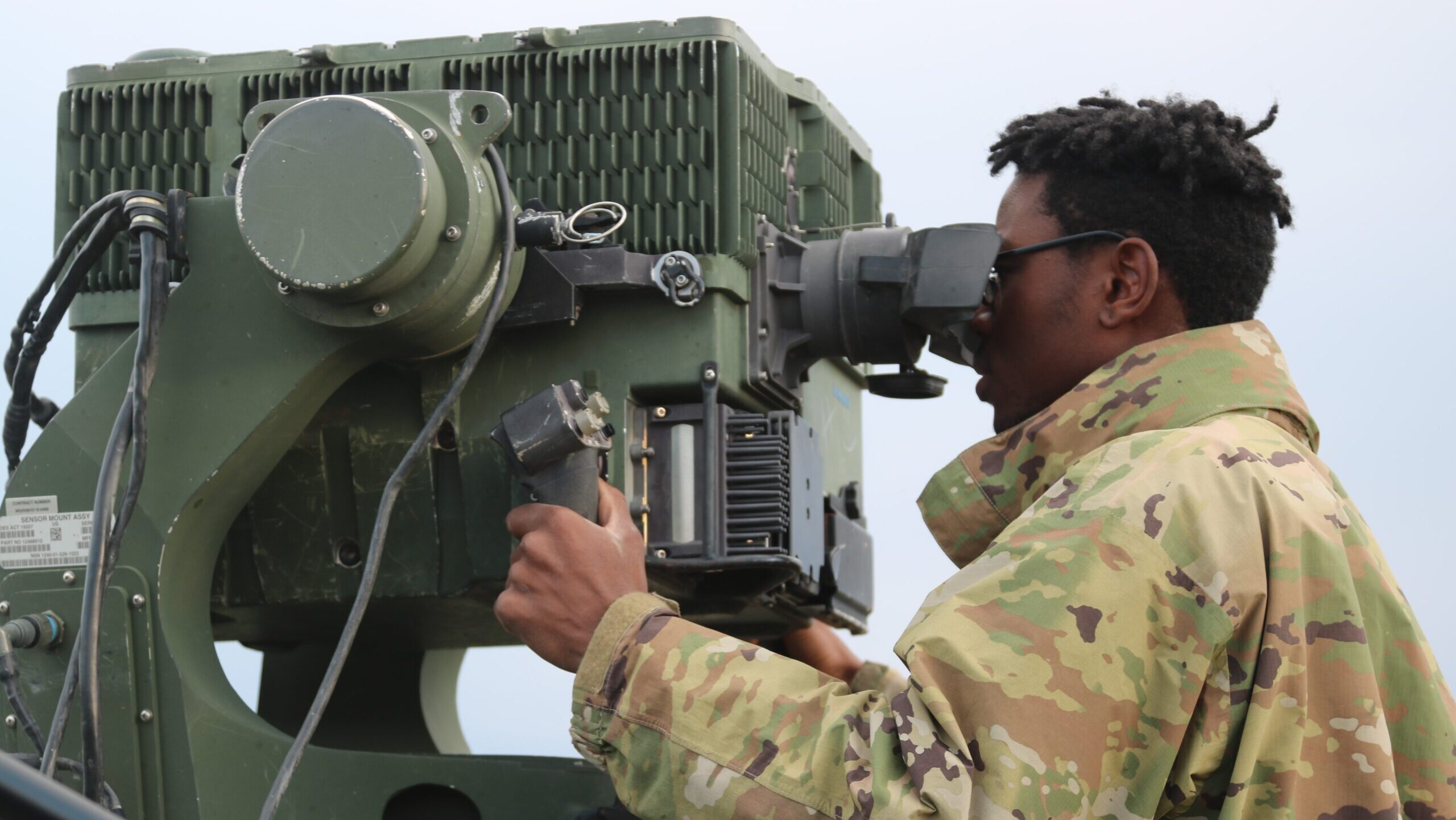
The troubled OCX ground system to allow users access to the jam-resistant M-Code GPS signal will go into operational tests by the end of the year, and the Space Force also has shaken up its effort to field M-Code radios and receivers, said Cordell DeLaPena, who heads those programs for Space Systems Command.
Supply chains are only as strong as their weakest link, which has been repeatedly proven to be true over the last few years.
The four companies chosen for the GPS augmentation program are Astranis, Axient, L3 Harris, and Sierra Space.

To make matters worse, the Defense Department is now facing down a possible shortage of microchips and processor cards to allow ground vehicles, ships and aircraft to access GPS at all, according to a new report by the Government Accountability Office.
SDA Director Derek Tournear said next year his organization will begin launching the Tranche 1 Transport Layer satellites for regional communications, which also will carry a "navigation message" embedded in their venerable Link 16 data links.

"Big software developments fail," said Air Force space acquisition czar Frank Calvelli. "You have to go to smaller systems."

AI-enabled workflows accelerate production, but cybersecurity and governance remain central.

The Space Force has set contradictory requirements for the number of M-code capable GPS satellites, the Government Accountability Office found.

If contractors are put on the Contractor Responsibility Watch List for failure to meet cost and schedule performance goals, the Space Force has "the ability at that point not to award them any new contracts."

“These albatrosses [have been] dragging the department down for decades. This is the year we are going to get these programs delivered," said Frank Calvelli, space acquisition head.

"SDA is considering signals different to GPS, but offered within the same frequency bands. If SDA’s military PNT service is located within the existing GPS frequency bands, it will minimize integration cost of new antenna systems on terrestrial weapon systems," explained Jennifer Elzea, SDA spokesperson.